


It's easy to eat lacto-fermented vegetables
Le goût avant tout !
Parfois, la nouveauté intimide. On nous demande souvent : « Mais comment ça se mange ? »
Le philosophe répondrait : « Avec une fourchette. »
Et c’est aussi simple que ça. Manger des légumes lactofermentés, c’est ouvrir un bocal et laisser parler son appétit.

La règle d’or : Pensez « Condiment »
Notre meilleur conseil est de les imaginer comme des condiments, des « pickles » vivants. Une ou deux bonnes cuillères à soupe suffisent pour colorer vos plats, apporter du croquant et une belle acidité.
🍽️ Nos idées pour vous lancer
- L’Incontournable : Super avec une raclette ou une fondue. L’acidité tranche le gras du fromage à merveille.
- Sur le pouce : Un régal dans un burger, un croque-monsieur ou un sandwich au fromage.
- En fraîcheur : Mélangés à vos salades (de légumes ou de pâtes), leur jus acidulé donne une longueur d’avance à votre vinaigrette.
- Le « Breakfast » : Parfait avec un œuf au plat ou sur une tartine d’avocat.
- L’Apéro : Simplement sur des crackers avec un verre de vin, pour ouvrir l’appétit avant le repas.
L’anecdote de la maison : Avec un bébé à la maison et peu de temps pour cuisiner, il nous est arrivé de customiser une pizza surgelée ! Le coup du Black Radish dessus ? En plein dans le mille.
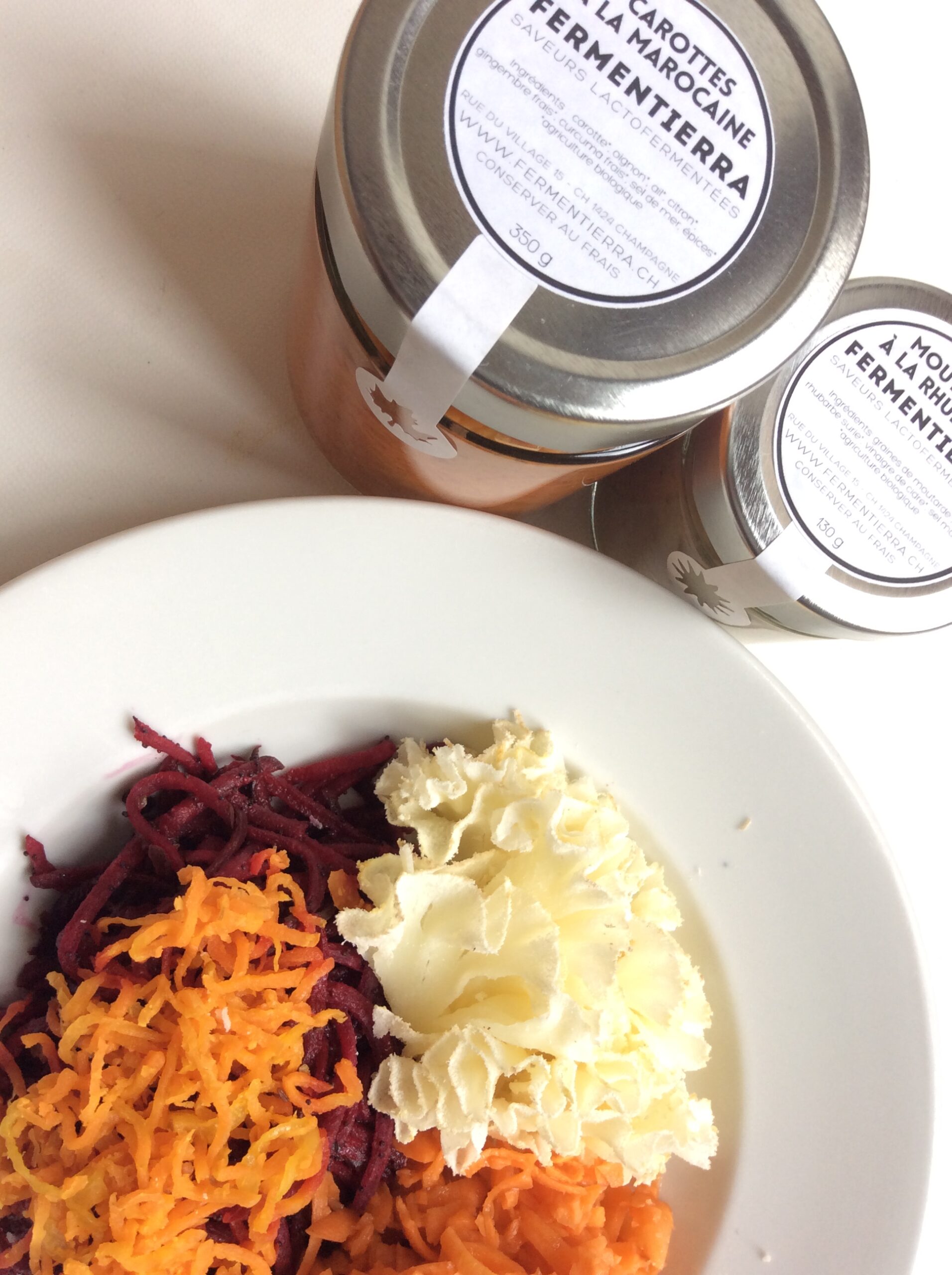
Cru ou Cuit ?
C’est une excellente question. Oui, il est possible de les chauffer.
Nous les utilisons parfois en fin de cuisson pour relever un bouillon, ou dans une lasagne chou-fleur/carottes. Mon frère a même revisité la choucroute de la mer en remplaçant la viande par du poisson : un délice !
🥗 Le petit point Santé
Si le goût reste délicieux cuit, c’est en les consommant crus qu’ils vous offrent le maximum de bienfaits. Vous préservez ainsi tous les nutriments, vitamines et bactéries lactiques intactes.
Le conseil nutrition : Intégrez-les régulièrement pendant un mois ou deux (comme une petite cure) pour redynamiser votre système digestif. Écoutez votre ressenti, c’est votre meilleur guide.
Ne vous creusez pas trop la tête : lancez-vous !
Nous préparons quelques recettes détaillées pour bientôt. En attendant, faites-vous plaisir en conscience.